
 中文
中文News

On July 8, Yang Changli, Secretary of the Party Committee and Chairman of CGN, and Pang Songtao, Deputy Secretary of the Party Committee and President of CGN, met in Hohhot with Wang Weizhong, Secretary of the Regional Party Committee and Director of the Standing Committee of the Regional People's Congress, and Bao Gang, Deputy Secretary of the Regional Party Committee and Chairman of the People's Government of Inner Mongolia Autonomous Region, and jointly witnessed the signing of a strategic cooperation agreement between the two sides.
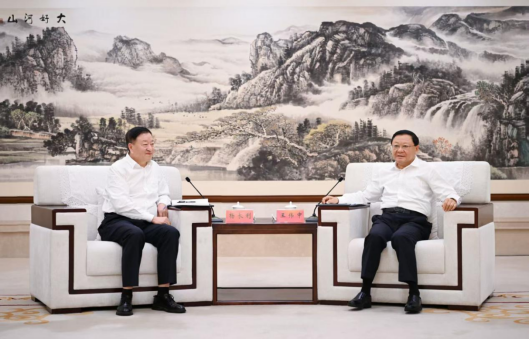
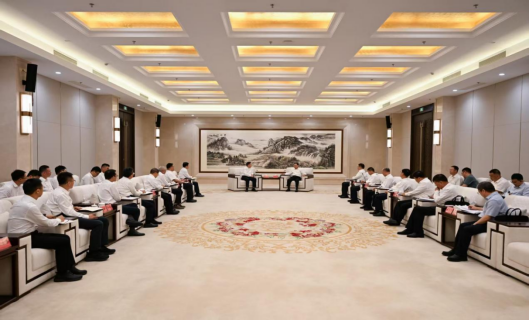
On behalf of the autonomous regional Party Committee and Government, Wang Weizhong welcomed Yang Changli, Pang Songtao and their delegation, thanked CGN for its longstanding support, and briefed them on the region's economic and social development. He noted that Inner Mongolia is an important national base for energy and strategic resources, and the region is now studying and implementing speeches and instructions made by General Secretary Xi Jinping for Inner Mongolia and his important expositions on national energy security. Under the regional Party Committee's "1571" work plan, Inner Mongolia is pursuing a diversified energy mix covering coal, electricity, oil, gas, wind, solar, hydro and nuclear power, upgrading traditional energy, expanding new-energy development and utilization, strengthening the exploration and use of strategic mineral resources and making every effort to safeguard national energy and resource security. He noted that CGN boasts unique strengths across the nuclear power industry chain, new-energy development and non-power nuclear technology applications, and holds huge cooperation potential with Inner Mongolia, He hopes that CGN would treat the signing as a new starting point, stepping up investment in sectors including photovoltaic-power-driven desert governance, green hydrogen-ammonia-methanol production, new-type energy storage and rural revitalization, and deliver more landmark projects in mineral resource exploration and comprehensive nuclear-energy applications. He also hopes CGN to keep fulfilling its safety responsibilities and underpin high-quality development with high-level safety performance, pledging the region's continued support.
Yang Changli thanked the autonomous regional Party committee and government for their support and briefed them on CGN's industrial layout and growth. He described Inner Mongolia—vast in territory and rich in resources—as a strategic core region for CGN's development, noting that during the 14th Five-Year Plan period the company's installed new-energy capacity in operation there surpassed 10 million kilowatts, spanning all twelve leagues and cities in the region. Looking to the 15th Five-Year Plan, he said CGN will build on the sound cooperation, deepen its commitment to green development, and keep increasing investment—with a particular focus on the large-scale power-transmission bases in desert, gobi and arid-wasteland areas, and coordinate the construction of projects in new energy, wind- and solar-powered hydrogen production, concentrated solar power, solar-powered desertification control, direct green-power supply and nuclear technology applications. CGN will shoulder its responsibility as a central state-owned enterprise and make greater contributions to build Inner Mongolia into an important national base for energy and strategic resources.
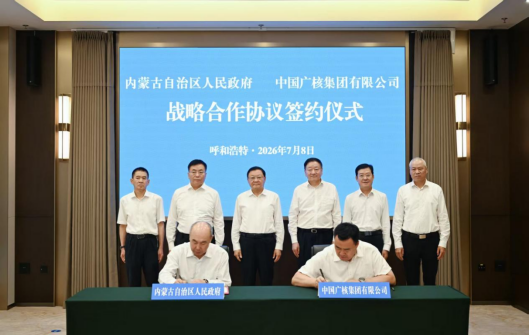
Dai Qin, Vice Chairman of the People's Government of Inner Mongolia Autonomous Region, and Li Yilun, Member of the Standing Committee of the Party Committee and Vice President of CGN, signed the strategic cooperation agreement on behalf of the two sides.
The event was also attended by autonomous regional leader Yu Lixin, officials from relevant regional departments and bureaus, and heads of relevant CGN headquarters departments and affiliated entities.

