
 中文
中文News

On August 7, CGN held the main event of its 14th "August 7 Public Open Day" at the Yangjiang Nuclear Power Base. The theme this year is "Chunhe Program Nurturing the Future" and all together ten nuclear power bases nationwide were carrying out activities in parallel. On that day, CGN officially launched the "Chunhe Program", a long-term framework for nuclear science outreach, rolled out the nuclear power industry's first digital outreach platform "Hexie Planet" Mini Programthe, and invited members of the public to become "Nuclear Partners" in science outreach. Together, these initiatives are moving nuclear power outreach beyond one-off open days toward a sustained, audience-specific, and systematic model of public participation.
The event was hosted by China General Nuclear Power Corporation (CGN) and organized by Yangjiang Nuclear Power Co., Ltd. More than 200 people attended, including Zheng Xiaomin, Deputy Director of the MEE South China Nuclear and Radiation Oversight Station (MEE/SCNROS); Lu Jiadong, Secretary of the Discipline Inspection Commission at the Nuclear and Radiation Safety Center of MEE; leaders and experts from the China Nuclear Power Development Center under the National Energy Administration, the China Association for Science and Technology, the Chinese Nuclear Society, the China Tourism Association, the China Energy Research Society, the University of Science and Technology of China, the China Society of Radiation Protection, the China Nuclear Energy Association, the Department of Ecology and Environment of Guangdong Province, other associations and societies, and Dongping Town in Yangdong District, Yangjiang; as well as teachers trained under the "Chunhe Campus Program", representatives of cultural-tourism and educational-tour organizations, faculty and students from universities and research institutes, and media representatives from across the country.
Fourteen Years of Growth: Nuclear Science Outreach Enters a New Stage of Collaborative Development
On August 7, 1987, CGN's Daya Bay Nuclear Power Base commenced its construction, starting the large-scale commercial nuclear power development in China. In 2013, CGN commemorated the anniversary by establishing its "August 7 Public Open Day," which aims to build a regular channel of communication between nuclear energy and the public and deepen the public's scientific understanding of nuclear power safety. The event has now been held for 14 consecutive years. From one-way opening of nuclear power bases to today's collaborative efforts involving companies, teachers and students, villagers, cultural-tourism organizations, and volunteers, the event has become an important platform for public communication on nuclear energy in China.
Lu Jiadong, Secretary of the Discipline Inspection Commission at the Nuclear and Radiation Safety Center of the Ministry of Ecology and Environment, remarked that nuclear science outreach must be grounded in the overall national security, explaining the fundamentals of nuclear safety in real depth. It should take a precise, segmented approach and make full use of digital tools. A model of shared governance among multiple parties shall be built to turn a "solo" by enterprises into a "chorus" across society. In June this year, the National Energy Administration and the Ministry of Ecology and Environment launched the "Green Nuclear Energy" outreach cooperation platform to drive industry-wide coordination, serving as an important step toward the shared-governance model.
"This year, working with the 'Green Nuclear Energy' outreach cooperation platform, we are officially launching the 'Chunhe Program' and opening public recruitment for 'Nuclear Partners' to join our nuclear science outreach efforts," said Huang Chao, Deputy Director of CGN's Party-Mass Work Department. "The Chunhe Program is a collaborative system for mobilizing broad social participation in nuclear power outreach, giving different groups a suitable path to get involved and achieving mutual benefit for all parties."
Preparatory work was already well underway before the official launch of the "Chunhe Program". Ahead of the event, CGN opened an online channel for the pre-launch recruitment of "Nuclear Partners" and brought together 40 junior high school teachers from across the country at Yangjiang Nuclear Power for specialized training in nuclear science outreach, building a strong foundation for broader public participation.
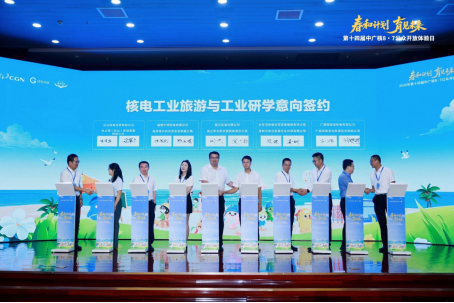
On August 6, CGN held a dedicated promotion and matchmaking session on industrial tourism resources and educational-tour cooperation at Yangjiang Nuclear Power. The session brought together representatives from government, enterprises, tourism and educational-tour sectors for in-depth discussion on product development, resource integration and market-based operation. In the session, CGN shared its overall plan for educational tours and case studies from the Yangjiang and Cangnan nuclear power bases, while the China Aerospace Cultural and Creative Center offered cross-sector experience from aerospace-themed educational tours. Nine nuclear power bases signed letters of intent with tourism institutions, aiming to build a platform connecting nuclear power outreach with the tourism industry and support the standardized, market-based development of nuclear industrial tourism and educational tours.
The "nuclear-fishery-tourism" educational-tour program jointly developed by Yangjiang Nuclear Power and the local government has drawn more than 43,000 students from Guangdong, Hong Kong and Macao to date, generated nearly RMB 700,000 in collective income for Yunbo Village, and boosted spending on dining, accommodation and other services in Dongping Town by more than RMB 1.8 million. "By building out our tourism offerings around the nuclear power educational-tour brand, we've seen visitors stay much longer, turning the town from a place people pass through into a destination in its own right," said Guan Li'na, Party Secretary and Head of Dongping Town, Yangdong District, Yangjiang. "This has effectively energized our coastal tourism industry and helped improve the quality and efficiency of the town's economy."
Four Sub-Programs Unveiled: Anyone Can Become a "Nuclear Partner"
The "Chunhe Program" is designed to meet the outreach needs of different groups precisely, building a diverse, professional platform for public participation that lets people from all walks of life take part in nuclear power outreach as "Nuclear Partners."
Chunhe Campus Program: Cultivating Science Outreach in Schools, Planting the Seeds of Scientific Curiosity in Young People
Focused on school-based outreach, the program provides standardized nuclear power outreach training and official certification for primary and secondary school teachers, along with dedicated teaching aids and premium courseware, systematically bringing nuclear science education into classrooms.
At the event, the science-outreach sketch "Chunhe Campus Science Show" used experiments such as liquid-nitrogen power generation, static-electricity flying flowers and plasma balls to make complex nuclear power principles tangible and easy to grasp. Trained teachers and student representatives then took the stage one by one to share what they had learned. Nuclear power bases and 12 nearby schools signed agreements to bring nuclear power outreach into classrooms on a regular basis. "We will bring what we've learned here, like nuclear power knowledge, the spirit of master craftsmanship, and a passion for serving the country through science and innovation, into our classrooms," said Gao Ying, a teacher representative from the "Chunhe Campus Program". "We'll keep nurturing young people's scientific literacy and creativity, helping build a pipeline of high-quality innovation talent for the country."
Chunhe Volunteer Program: Lowering Barriers to Participation and Building a Nationwide Outreach Network
The program openly recruits outreach volunteers from across society, equips them with a full set of outreach courseware and branded materials, and offers a points-based incentive system to attract more members of the public to join the outreach effort.
A sketch titled "Dad's Worries" told the story of nuclear power engineer "Engineer Qiao," who struggles after being assigned an outreach task, going from a 68-slide PPT all packed with QR codes to explaining nuclear power's four safety barriers using nothing more than a piece of chocolate. With the "Hexie Planet" Mini Program, scientific outreach is far less stiff and formal. The event also presented certificates to the first group of outreach volunteers and called on the public to join the volunteer ranks, helping raise enthusiasm for nuclear science outreach nationwide.
Chunhe Cultural Tourism Program: Turning Landmark Nuclear Power Projects into Learning Classrooms and Building a Model for Industrial Tourism
The program will make full use of the educational and tourism value of China'snuclear power projects as the "Key National Equipment", opening the industrial-tourism and educational-tour resources of nuclear power bases to cultural-tourism organizations free of charge. Through market-based matchmaking and cooperation agreements, it aims to jointly develop high-quality nuclear-themed educational-tour products and promote deeper integration between industrial tourism and science outreach.
Gao Shunli, a member of the China Tourism Association's Expert Committee, said CGN's launch of the "Chunhe Cultural Tourism Program" proactively opens up its nuclear tourism resources, builds a dedicated matchmaking platform, and jointly develops themed educational-tour products. Such a systematic model to promote industrial tourism has set an example for educational tourism nationwide.
Chen Jiangwei, Member of the Party Committee and Vice President of Yangjiang Nuclear Power, delivered a presentation titled "Many Hands Make a Strong Flame: An Introduction to Yangjiang Nuclear Power's Industrial Educational Tours." He provided an in-depth overview of the core strengths of the Yangjiang educational-tour base, course highlights, "nuclear-fishery-tourism" resources, specialized teaching materials, and its local-dialect guides.
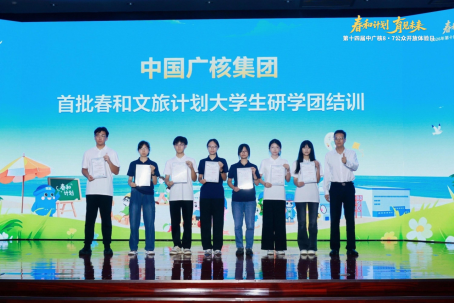
At the event, cultural-tourism organizations including CITS (China International Travel Service Limited, Head Office), China Comfort Travel Group, and the Guangzhou branch of New Oriental Cultural Tourism Group signed strategic cooperation agreements with CGN. The parties will work closely to develop a range of educational-tour products with the theme of "Key National Equipment" and jointly build a distinctive nuclear industrial-tourism brand. The event also presented summer educational-tour completion certificates to the first cohort of the program, including more than 60 university students from Harbin Engineering University, South China Normal University, and other institutions, encouraging them to continue contributing their energy and enthusiasm to nuclear science outreach.
Chunhe Local Dialects Program: Sharing Nuclear Power Knowledge in Local Dialects and Empowering Rural Revitalization through Outreach
The program provides professional training for villagers, enabling them to explain nuclear power in easy understanding language and local dialects. Trainees who pass the assessment receive certification and can serve as guides for nuclear power educational tours, gaining flexible and local employment to increase income while using science outreach to empower rural revitalization.
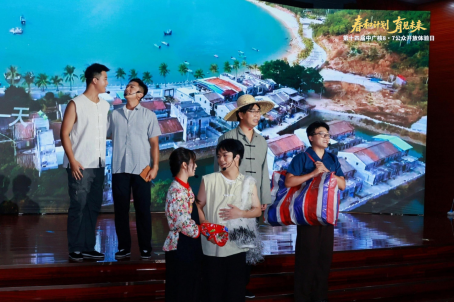
In the sharing session, Yu Xinglong, CGN's first secretary stationed in Yunbo Village, vividly described the changes the village has undergone with wider roads, brighter street lights, young people willing to return home, and a new nickname of "Nuclear Power Village." Three local-dialect guides, Chen Siqin, Cai Yiling and Lin Yijun, then took the stage one after another to share their own stories of getting involved in nuclear power industry. From a pair of hands in a tie-dye workshop, to the path taken by a young returnee and to the curiosity lit in a pair of twins' eyes, they were telling nuclear power's story in their own dialect and conveying their deep attachment to their hometown. The event also featured a performance of the original song "A Road Lit with Light," based on a true story of cooperation between the company and the local community, depicting the warm picture of nuclear power and rural life thriving together.
Hexie Planet Goes Live: A Digital Platform Connecting the Entire Outreach Process
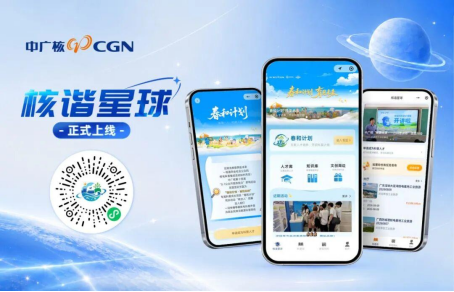
To support the long-term operation of the "Chunhe Program" and make participation easier and more efficient, the event also launched CGN's "Hexie Planet" Mini Program, the nuclear power industry's first digital outreach platform. The platform integrates six modules, event booking, resource management, event publishing, data dashboard, cultural and creative products store, and talent management. Users can apply to become outreach teachers, register as local-dialect guides, claim volunteer assignments, and download standardized courseware all through a one-stop online program. "In the past, going into schools meant simply giving a lecture," said Wang Ye, a Yangjiang Nuclear Power employee who has volunteered in science outreach for eight years. "Now standardized courseware and interactive experiments are available at the tap of a button, and we can earn points to redeem for cultural and creative products. It is much more engaging."
Outreach Powers Shared Growth: A New Picture of Company-Community Integration
An online platform brings together outreach resources, while offline action drives shared industrial growth. The "Chunhe Program" is more than an outreach framework. It is also a new vehicle for company-community integration and rural revitalization.
"We follow a development philosophy of shared building, shared benefit and shared growth, and are deeply embedded in the region's economic and social development," said Yang Jianbing, Secretary of the Party Committee and Chairman of Yangjiang Nuclear Power. "Building on Yunbo Village's status as a provincial-level rural revitalization demonstration village, we've worked with local authorities to explore a distinctive 'nuclear-fishery-tourism' development path and nurture new business lines such as local-dialect guiding and industrial educational tours, boosting collective village income and achieving shared prosperity between clean energy development and local development."
In Yangjiang, visitors from the educational-tour program have driven growth in homestays, local fishing specialties and handmade tie-dye crafts, enabling fishing-village residents, young returnees, stay-at-home mothers and others to find flexible work close to home, injecting strong momentum into the local rollout of Guangdong's "Hundred Counties, Thousand Towns and Ten Thousand Villages" high-quality development initiative.
In Cangnan, CGN has woven the Hualong One brand deeply into local tourism, teaming up with the local tourism investment group to bring the Sanao Nuclear Power Science Museum into commercial operation and create a distinctive regional industrial-tourism attraction.
In addition, CGN's nuclear power bases are drawing on their own regional characteristics to develop distinctive nuclear-themed products in industrial educational tours and tourism, actively exploring development models suited to local conditions and helping the "Chunhe Program" take root in more places.
With spring in the air and everyone moving in the same direction, CGN will keep advancing nuclear science outreach toward a more regular, professional and systematic model, from a single outreach class, a local-dialect presentation, an educational tour or a volunteer talk, to a thriving village economy and greater scientific literacy nationwide. CGN warmly invites everyone who cares about clean energy to join the "Chunhe Program", spread the power of zero-carbon energy together, and build a cleaner, brighter energy future side by side.

